
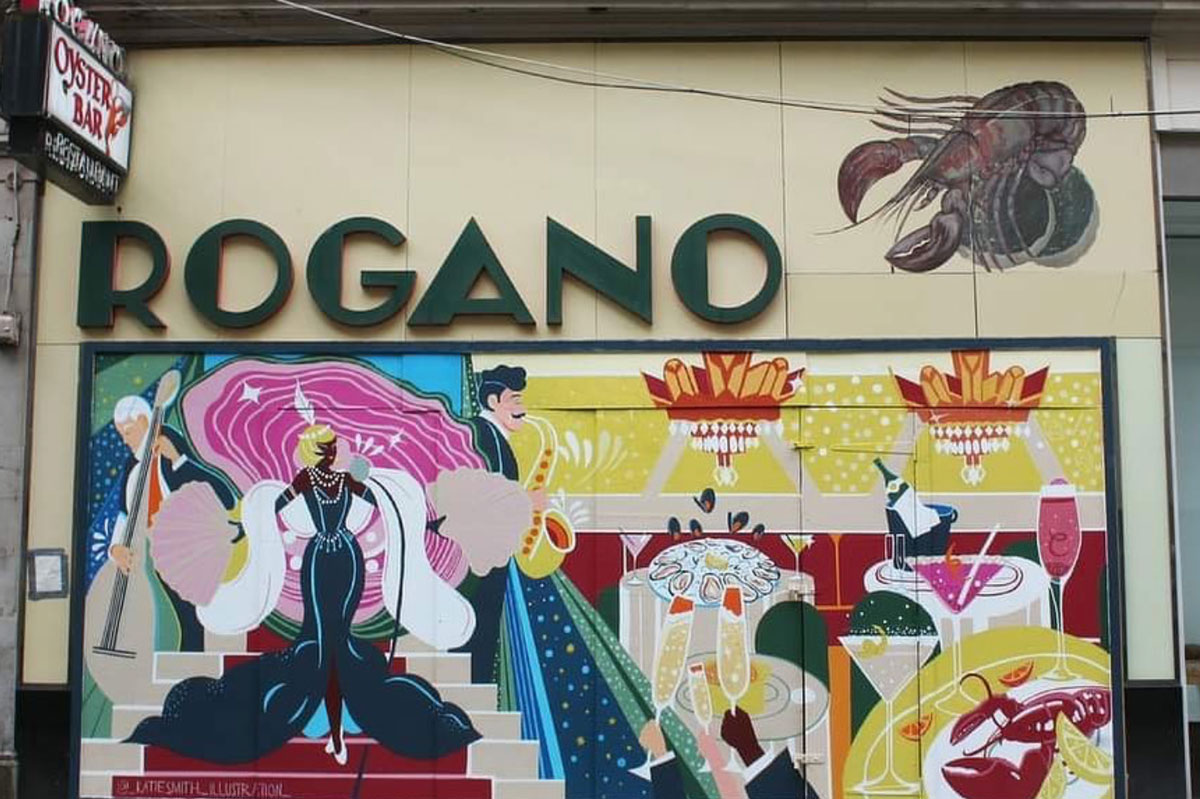
Before it was closed by fire and flood, Glasgow’s oldest restaurant, Rogano, was a famed fulcrum of the city’s nightlife, frequented by the rich and famous, and oft mentioned in the gossip columns of the national Press.
Although the shutters have been down on the Exchange Place venue since repeated flooding and an electrical fire during the Covid shutdown rendered it unsafe, it was back in the headlines this week, as the contract dispute that has blocked repairs to the site progressed to the UK’s Supreme Court.
The long-running legal row has been between Forthwell Limited, a company linked to Glasgow pub veteran James Mortimer, which has been trading as Rogano since 1935, and its landlord, Pontegadea UK, owned by 90-year-old Spanish billionaire Amancio Ortega.
Simply put, the Rogano has been pursuing Pontegadea for its lost profits due to the closure, accusing the landlord of failing to adequately maintain and repair the building.
The legal complication – and the reason the case progressed to the highest court in the land – is the existence of a third party in that tenant-landlord relationship.
Back in 2013, Forthwell assigned its interest in the lease of the Rogano to a subsidiary, Lynnet Leisure Rogano Limited, which then traded at the site under a ‘licence to occupy’.
So Forthwell’s claim was actually that Pontegadea had caused Lynnet Leisure to suffer a loss of profits, which in turn had caused losses to Forthwell.
Pontegadea had countered that Forthwell could not recover profits lost by a third party – and warned that a judgement in favour of the Rogano’s owners would set a new precedent for Scots contract law that ‘any entity’ that suffered loss due to a breach of contract could make a claim, even if they were not a party to the disputed contract.
On Wednesday of this week (May 20) the Supreme Court – which usually resides in London but when occasion demands can sit elsewhere – came to Glasgow to hear these possibly crucial arguments.
However what transpired – since described as ‘mortifying’ for all the esteemed legal professionals involved – was an eleventh hour pre-court agreement between the parties.
At the start of Wednesday’s hearing, sitting in Glasgow City Chambers, David M Thomson KC, for Forthwell, said the two parties had reached an agreement on Tuesday evening. No details of this settlement were disclosed in court.
Thomson apologised for the claim settling at such a late stage, describing it as a ‘matter of considerable professional embarrassment’: “It is only in the course of the last week that the parties have been able to resolve the gap that existed between them. I cannot present that to the court as an acceptable narrative, because it is not.”
The president of the Supreme Court, Lord Reed, dryly replied: “Yes, that is putting it mildly.”
However, both sides argued that, despite the agreement, the appeal should still be heard to resolve the wider legal issues in the case, particularly because another simiar case was pending that had paused in anticipation of the Supreme Court’s ruling.
Lord Reed said: “It is a matter of public importance that the time of the court is used in the public interest, and it is in the public interest that we should resolve the legal question raised by the case, which will be important in other cases.”
Those arguments before Lord Reed, Lord Stephens, Lord Doherty, Lord Hodge and Lady Simler concluded on Wednesday afternoon, with a judgment expected in writing at a later date.
Whether this legal episode means that the famed Rogano may now re-open remains unclear.