By Dave Hunter
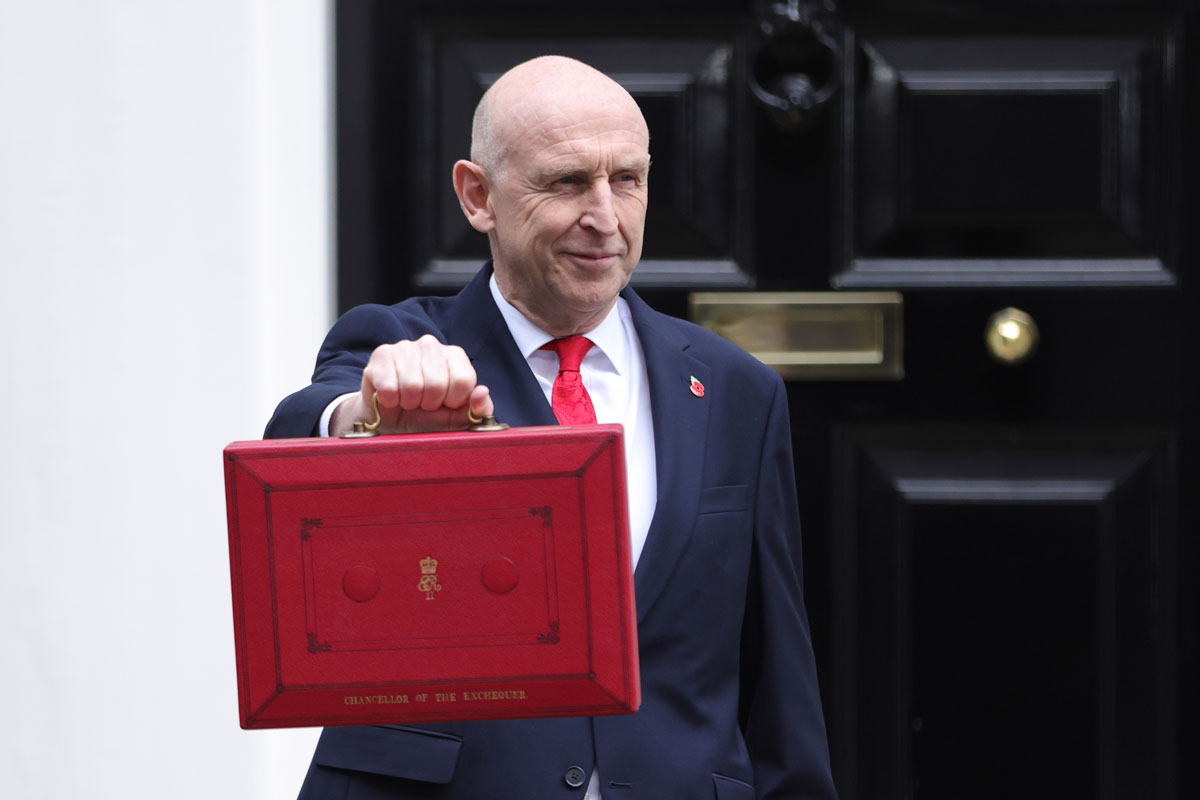
Chancellor John Healey’s failure to reduce VAT for hospitality businesses as part of his first Budget has been described as ‘immensely disappointing’.
In the lead up to last month’s Budget over 400,000 people had signed a petition urging the government to cut VAT for hospitality businesses from 20% to 10%.
The Irish government has recently taken action on VAT, cutting its rates to 9%, and prime minister Andy Burnham had earlier signalled he supported a cut to the rate for hospitality.
However, no mention of VAT was made during the 28th October Budget.
Instead, Healey announced an extension of the UK Government’s business rates relief scheme – a move that should mean additional funding made available to the Scottish Government through the Barnett Formula – but also announced increases to the National Living Wage and National Minimum Wage which will put additional pressure on businesses.
SLTA managing director Colin Wilkinson said the lack of movement on VAT ‘was predictable and disappointing in equal measure’.
“How envious we are of the Republic of Ireland’s tourism and hospitality sector, which is a key competitor to the UK, which has been given greater recognition of its importance to the country’s economy and greater support from its government, which acted to support the industry by reducing VAT rates down to 9% recently,” said Wilkinson.
He added that the increases to the Living and Minimum wages ‘will not only jeopardise job creation but also put current jobs at risk’.
That was supported by Scottish Tourism Alliance chief executive, Marc Crothall, who said the rising cost of doing business ‘continues to bite hard, with increased employment and operating costs and high levels of taxation all putting pressure on businesses and their ability to invest’.
“Our tourism and hospitality sector is a vital part of Scotland’s economy, and there is a significant opportunity for growth, particularly from our international markets,” said Crothall.
“We already know that people want to come to Scotland. The opportunity now is to capitalise on that demand, but to do that we have to stay competitive on price and keep investing in the quality of experience people expect when they get here.”
Paul Togneri of the Scottish Beer & Pub Association said Scottish operators ‘will see little direct benefit’ from the Budget, unless the Scottish Government moves to provide equivalent support on non-domestic rates when it unveils its own Budget in December.
“Scotland’s pubs remain at the heart of communities across the country, but many are still grappling with rising employment, energy and regulatory costs. The Budget does little to address those challenges,” said Togneri.
“The Scottish Beer & Pub Association is now calling on the Scottish Government to pass on the full value of any Barnett consequentials arising from business rates support in England and to use that funding to provide meaningful relief for Scottish pubs and hospitality businesses.
“There is no justification for Scottish firms being placed at a competitive disadvantage to businesses elsewhere in the UK.”
That was echoed by Leon Thompson, executive director of UKHospitality Scotland, who said: “UKHospitality Scotland now urges the Scottish Government to go further in its budget on 3rd December, and provide additional business rate support for hospitality here.
“Whilst it is immensely disappointing that the chancellor chose not to reduce the rate of VAT for hospitality, this makes it even more vital for this business rates support to be passed to our businesses, and that existing support measures be extended to hospitality businesses with rateable values above £100,000.
“In doing so, business closures can be stemmed, and hospitality can play its full part in driving economic growth in every part of the country.”