When James Brown, the co-founder of craft beer subscription service Beer52, had trouble finding an alcohol-free beer that he liked, he had a straight forward – but far from simple – solution: make his own.
Brown was already a craft beer fan when he co-founded Beer52 in 2013.
The premise of that business wasn’t complicated: offer a curated selection of craft beers to subscribers which are delivered to their door along with a magazine explaining the story of each one.
By the time Brown left in 2022, Beer52 laid claim to being the biggest business of its kind anywhere in the world.
When James left, it was to focus on his growing alcohol-free beer business, BRULO.
“I could not find an alcohol-free beer I actually wanted more than one of.”
Founded in 2019, BRULO was set up ‘because I could not find an alcohol-free beer I actually wanted more than one of’, said Brown.
“Plenty were fine for a single polite can, but none had the drinkability that makes beer, beer.
“That became the whole point of BRULO: properly sessionable alcohol- free craft beer you reach for again.”
It wasn’t an easy ask, and James said every product in the range has been through hundreds of iterations before it’s judged good enough.
The biggest challenge, he said, is that ‘alcohol does a lot of heavy lifting in beer’.
“It carries body, mouthfeel and aroma, so when it is not there, you have to earn all of that back through brewing craft,” he said.
“We never remove alcohol from a finished beer. Every BRULO is brewed from the ground up at a specialist facility using innovative yeast cultures, hand selected ingredients and modern brewing techniques, so the beer is designed to be brilliant at 0.5% rather than being a full-strength beer with something stripped out.”
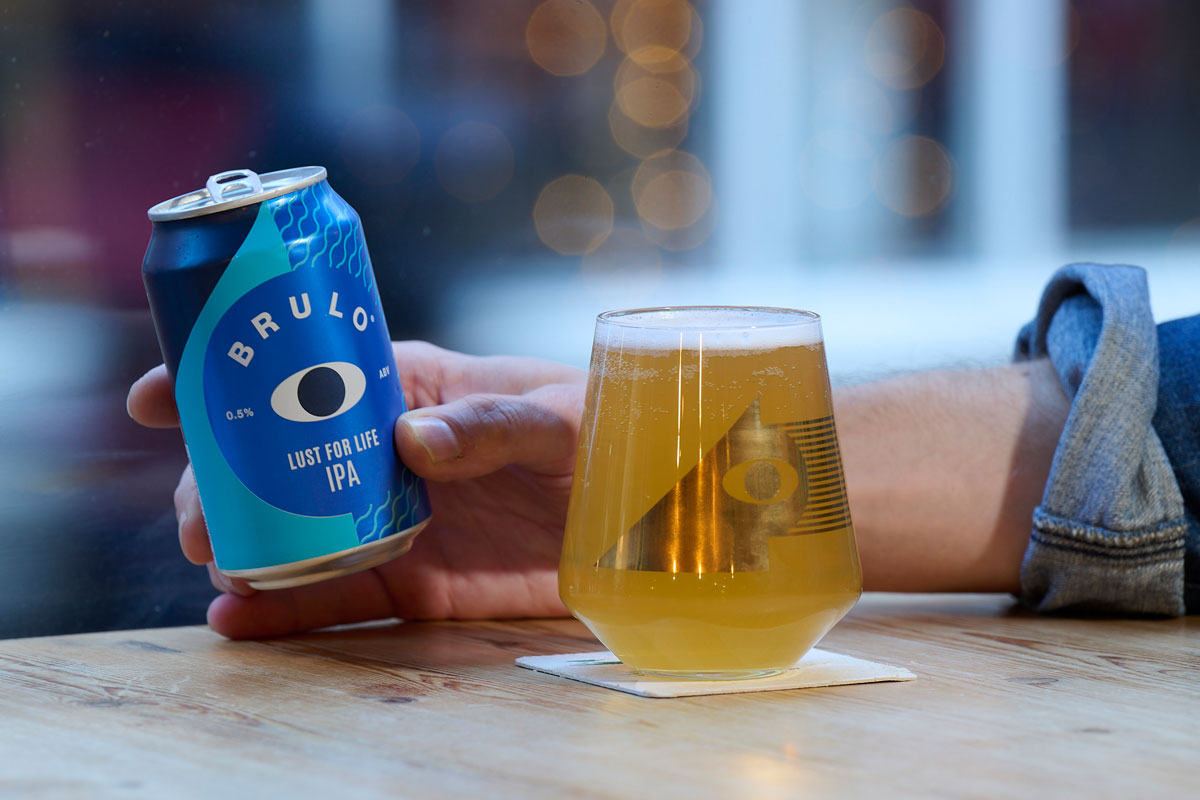
BRULO’s first beer, Lust for Life, was a double dry hopped IPA that continues to be the company’s flagship to this day.
James said that, for the first few years, he was happy running BRULO as ‘a small labour of love’, but demand quickly outgrew what was possible for a one-man operation, and so he opened up the company to funding, ultimately securing backing from investors including Logan Plant, the founder of Beavertown, and Funkin founders Alex Carlton and Andrew King.
The team has subsequently grown to include Will Alex as sales director and Jonathan Phillips as national on-trade sales controller, both of whom were recruited from Funkin.
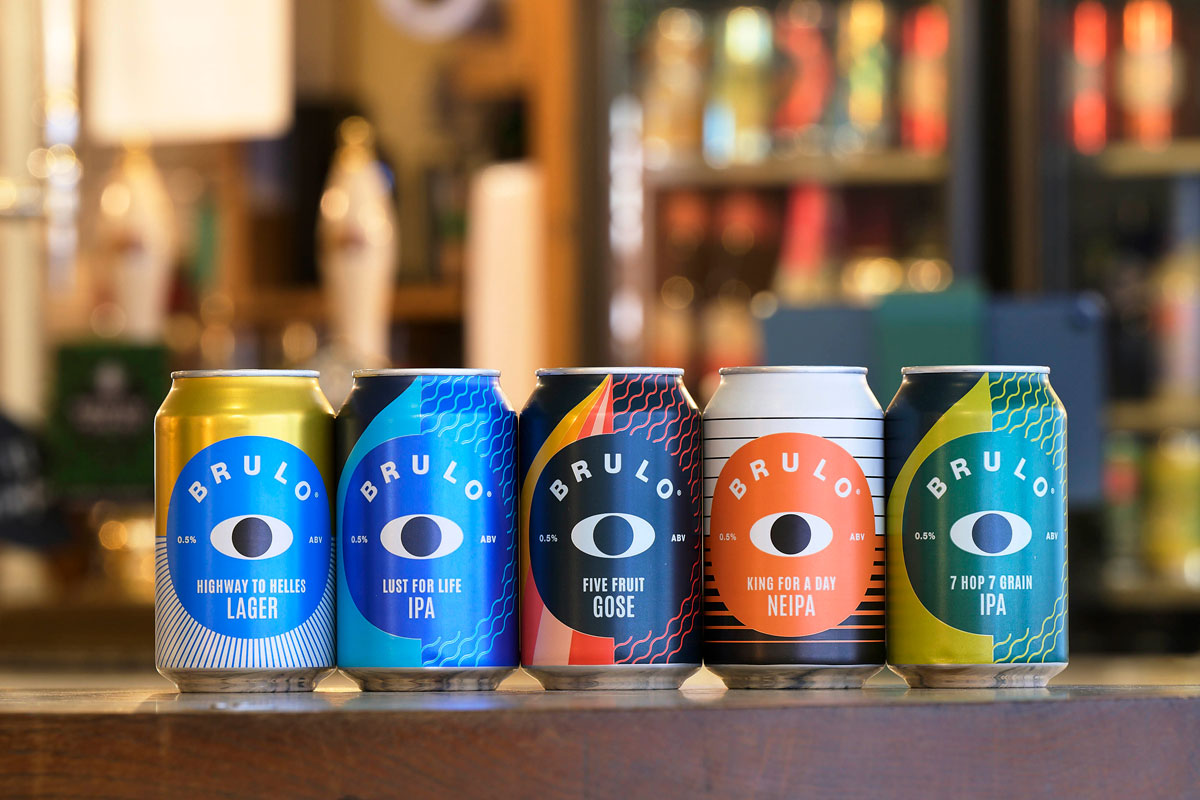
The product range has also grown. Lust for Life was followed by King for a Day, a New England IPA; Highway to Helles, a lager; 7 Hop 7 Grain, an IPA; Five Fruit Gose; Cascadian Tides, a stout, and the company’s newest release, All Good IPA, which lays claim to being the world’s first beer to officially qualify as high in fibre, with 5 grams of fibre per can.
The range is available in 300ml cans as well as in kegs.
With a strong core range and sales team in place, BRULO is now targeting growth in the on-trade as it aims to become ‘the go-to alcohol-free beer’.
“Scotland is home turf for us. BRULO was founded in Edinburgh and the Scottish on-trade is a big focus for the team this year,” said James.
“We are stocked across a growing mix of venues, from premium bars and restaurants through to hotels and independent bottle shops, and the common thread is operators who take their drinks list seriously and want an alcohol-free option that matches the quality of everything else on the bar. With key Scottish partners now on board, it has never been easier for venues to get Brulo on the bar.”
Stockists of the brand include Dunns Food and Drinks, Inverarity Morton, James Clay and L’Art du Vin as well as Sellar Distribution.
And James reckons the potential for growth in the alcohol-free sector is ‘enormous’, pointing to recent research that found nearly half of Brits are now ‘zebra striping’ – alternating between alcohol-free beer and full-strength products in one night.
“These are your existing customers moderating: the midweek pint, the designated driver, the person having a big Friday and a quiet Saturday.
“Our own data backs it up. A 73% repeat purchase rate tells you this is a habit, not a trend.
“The venues that treat alcohol-free as a proper category now, rather than a token gesture, are the ones that will own that customer as the category keeps growing.”
That last point – that venues need to treat the category seriously – will be crucial, and Brown said there are three steps operators can take to ensure they are best positioned to ride the alcohol-free wave.
“First, and this is the one most operators miss: fine is the problem,” he explained.
“Most alcohol-free beers are fine for one polite can, and that is exactly why they do not sell. Nobody orders a second, and the customer quietly switches to tap water.”
Quality, said Brown, is as important in alcohol-free as it is in other drinks categories.
“Customers can taste the difference, and one bad alcohol-free beer convinces them the whole category is not for them,” he said.
Visibility is also essential, said Brown, exhorting operators to ‘put it in the fridge at eye level and on the menu, not hidden at the bottom under soft drinks’.
And there has to be breadth of range.
“You would not offer one wine and call it a wine list,” said James.
“The customer choosing not to drink tonight might be the one picking the venue for a group of eight, so a proper alcohol free range is not a nice to have any more. It is how you win the whole table.”