By Niall Hassard
With fewer customers than ever driving to their local pub the pub car park is often an under-utilised asset.
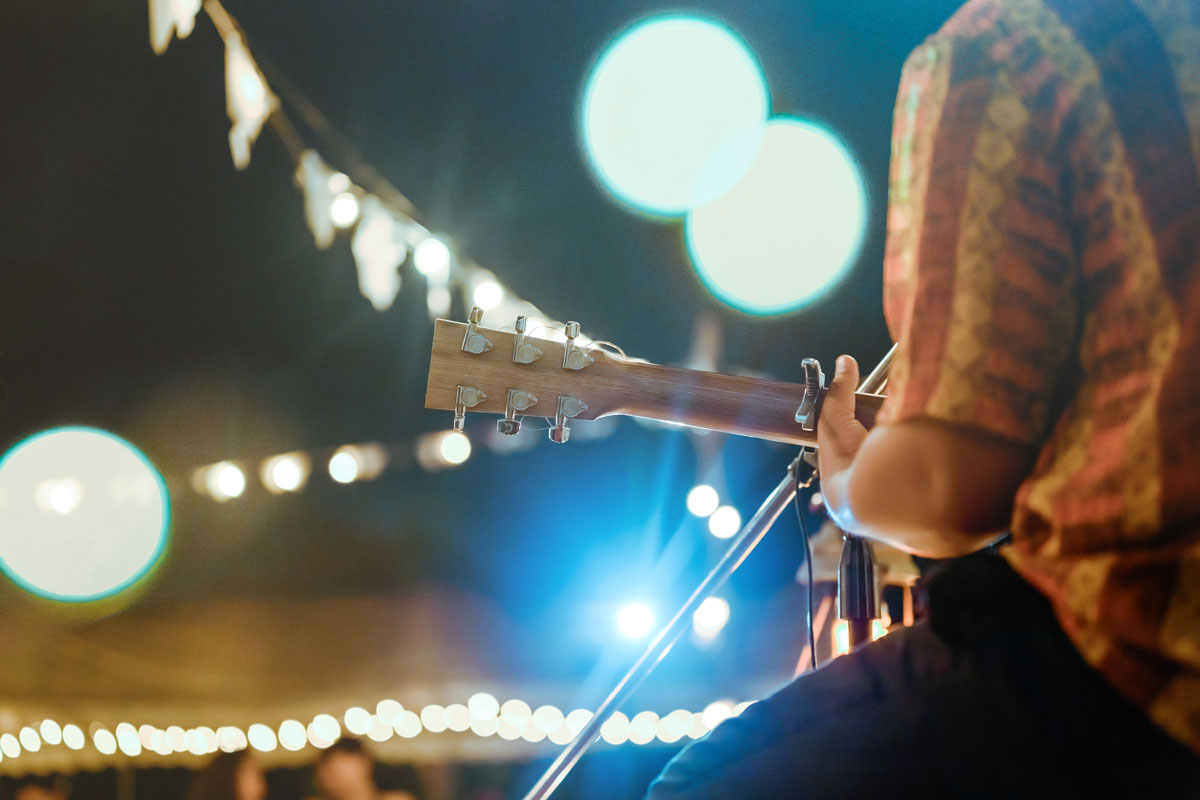
Increasing numbers of my clients are coming to me looking for advice on turning their pub car park into a bustling open-air venue. It is an excellent way to drive footfall, host a community group/event, showcase local talent, and put your pub on the map. Whether a summer music/beer festival or a winter Christmas Market there are ideas aplenty.
However, delivering a community or music event outdoors in Scotland requires careful planning and a reasonably long lead in time.
As you will see there are a number of licences beyond an occasional licence for the al fresco bar. This overview will look at the essential components and flag some key considerations for the budding event planner.
The starting point is always a layout/site plan. What do you want to licence, where will infrastructure be, what residual customer space is there (once bars, food vendors, stalls and stages are in situ) and what is the customer capacity. The plans should be drawn to scale and show the key components mentioned.
An Event Management Plan (EMP) is critical. An EMP is a comprehensive document that details exactly how you will run your event safely and legally.
It should start with the basics – event dates, operating times, live music schedules, target audience, and expected peak capacity.
Depending on projected numbers a crowd management and security section will be scrutinised, therefore document how people enter, exit, how numbers are controlled and what the expected behaviour on the day is.
The ratio of Security Industry Authority (SIA) licensed stewards to patrons and the stewards’ specific duties (e.g., checking IDs, bags, and tickets) should be provided. The clicker system or ticketing method should be used to ensure you do not exceed the maximum safe capacity.
Consideration should then turn to medical and first aid provision. The level of medical cover provided (e.g., St Andrew’s First Aid, trained pub staff, or private paramedics) will be based on your crowd size and risk assessment. This should be documented in the EMP.
The EMP should detail your emergency procedures in the event the site needs evacuated.
To demonstrate that you are keeping the local community and local environment in mind have a section that goes into noise management i.e. your strategy for keeping sound levels within agreed limits, including scheduled soundcheck times, speaker orientation, and live decibel monitoring.
As boring as it sounds your EMP should consider waste and litter and additional toilets. There are guidance documents (e.g. “the Purple Guide”) that have calculations to follow to ensure you have enough sanitary facilities (including accessible toilets) for your capacity by using temporary portable loos to supplement the pub’s indoor toilets.
Finally, you’ll need to consider stages (a permission from Building Standards may be required for raised platforms) and given this is Scotland… a marquee or stretch tent may be needed even in the height of ‘summer’ to guard against the rain.
Details and specific drawings should be provided in the EMP or with the various licence applications which we consider shortly.
In advance of looking at the licensing the organiser should ensure suitable public liability insurance is in place.
Now on to the licensing…
To licence the car park for the sale and consumption of alcohol you’ll need an Occasional Licence. It is perhaps the most obvious permission required. In most licensing board areas you’ll need a minimum of six weeks’ notice (this can be more) and the fee nationwide is fixed at £10 for up to 14 days.
To put on a wide range of entertainment (singers, bouncy castles or outdoor screens) a Temporary Public Entertainment Licence (TPEL) will likely be required. Many Licensing Authorities will expect three months’ notice, and the fees vary widely across Scotland. Often linked to customer capacity, the fees can range from hundreds of pounds to thousands of pounds. These temporary permissions can last up to six weeks.
Every Scottish council sets its own PEL rules (known as a “resolution”) so always get advice early to allow you to plan and budget.
The requirement for a Temporary Market Operator’s licence is triggered when goods are offered by more than one seller for sale by retail to the public. You’ll therefore need one if you plan to have independent local craft stalls or external food trucks set up in the car park.
For food vendors most councils will have a minimum food standard requirement and details of food vendors’ registration (as a food business), arrangements for hot and cold water and various safety certificates will be needed. Examples include Gas Safe, PAT testing from the vendors and if you are connecting them to the mains an EICR.
Again, these TMOL permissions can last up to six weeks.
The licensed trade continues to innovate. In spite of adversity, pubs are coming up with new and novel ideas to cater for their local community and make the pub vibrant and outdoor events are a great way of getting people out of the house.
With some tailored advice and a bit of diligent planning, outdoor events are certainly here to stay.

The advice offered in SLTN is published for information only. No responsibility for loss occasioned by persons acting or refraining from action as a result of material contained on this page or elsewhere in SLTN can be accepted by the author or publisher.