
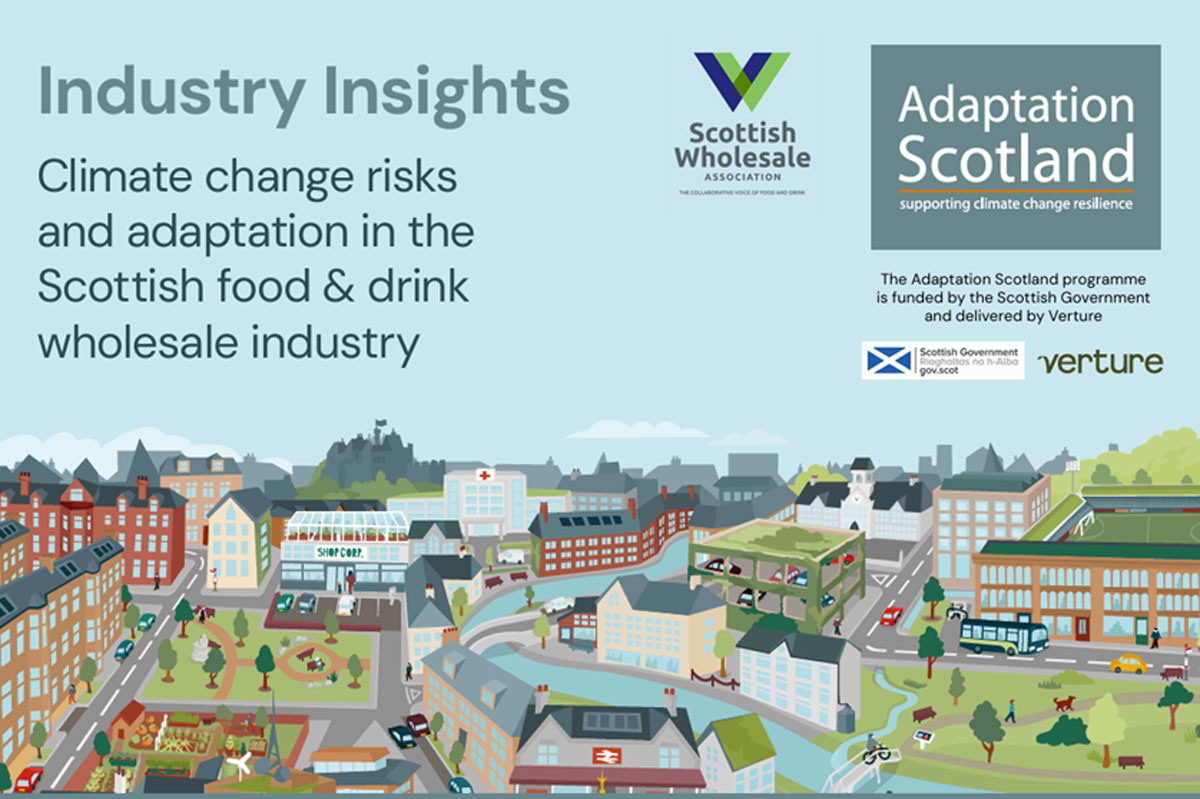
 Scotland’s food and drink wholesalers must prepare for the impacts that climate change is having – and will continue to have – on the sourcing, storage and transportation of perishable goods.
That’s the urgent message from the Scottish Wholesale Association, which has just published a guide designed to help businesses brace themselves for extreme weather.
‘Industry Insights: Climate Change Risks and Adaptation in the Scottish Food & Drink Wholesale Industry’ offers advice on severe weather planning, flood-resilience, heat and humidity management, and supply chain diversification.
Prepared in partnership with the Adaptation Scotland programme, which is delivered by climate resistance charity Verture, and funded by the Scottish Government, the SWA guide proposes straightforward steps to support workforce, premises, products, supply chain, and the surrounding environment.
It also features examples of businesses that are already adapting and finding opportunities to strengthen their business resilience.
SWA head of sustainability and communications, Ylva Haglund, said: “Scotland’s food and drink wholesalers play a critical role in ensuring that food is available across the country
“This new publication is a valuable asset for wholesalers, designed to offer practical, straightforward guidance on steps to take to strengthen wholesale businesses against climate risks, but also seize new growth opportunities.”
Verture’s leadership programme manager. Emilie Wadsworth, added: “Recent extreme weather events have highlighted the impact the climate can have on our economy, in particular supply chains, infrastructure and logistics.
“We are delighted to have been able to work with the Scottish Wholesale Association to produce this guide to support its members in recognising the risks to their businesses, employees and communities, and take steps to become more resilient in a changing climate.”
The guidance has been co-developed by SWA members including Bidfood and Greencity Wholefoods, which both feature in case studies within the guide.


Speaking about it actions in response to a severe storm in early 2025, Greencity Wholefoods’ HR manager Leigh Galletly said: “When it became apparent that Storm Éowyn posed not just a significant threat to our ability to deliver but also to life, we kicked into action and came together to plan around it.
“As a result of that very extreme situation, and knowing that it may well reoccur, Greencity has devised an action plan to be better prepared for similar weather events going forward.”
At Bidfood, head of sustainability Julie Owst said: “Climate change poses many challenges to businesses – operational and financial impacts from extreme weather being just part of a bigger picture of change that businesses need to understand and respond to.
“Our customers rely on us delivering a reliable service, so taking action to mitigate the impacts of these operational challenges is crucial.”