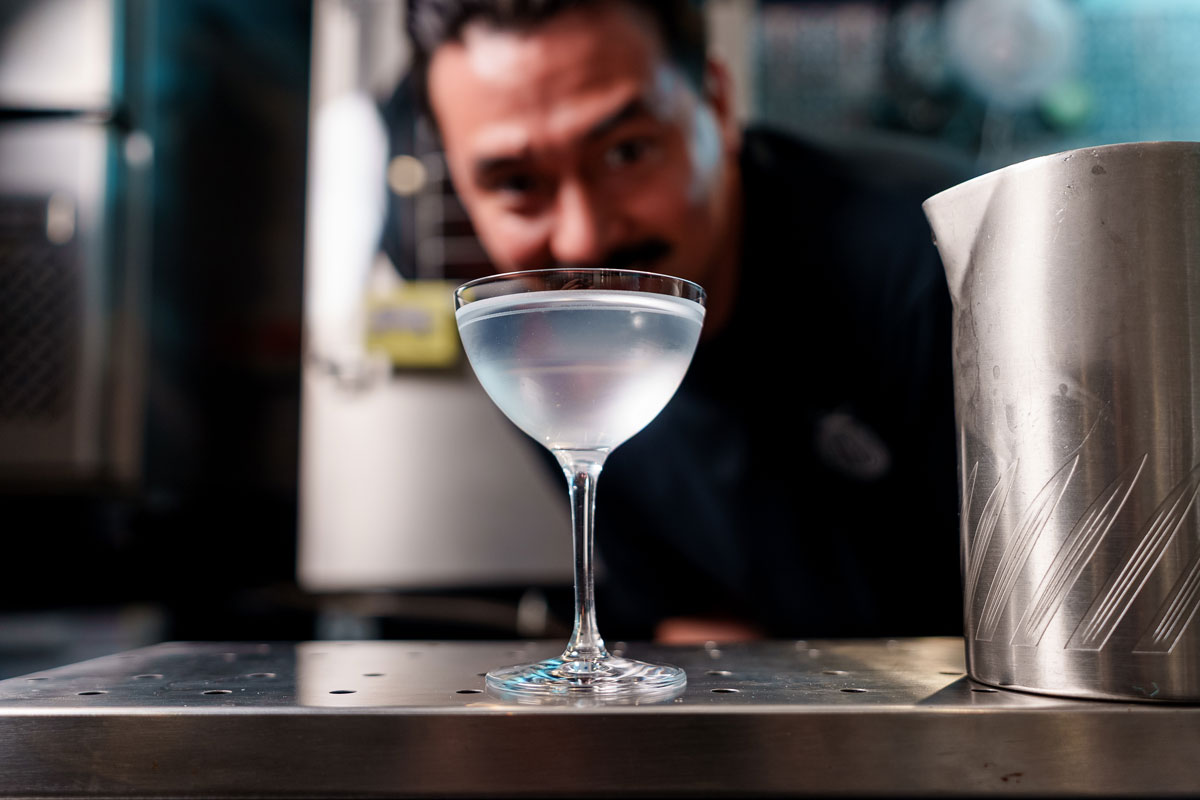



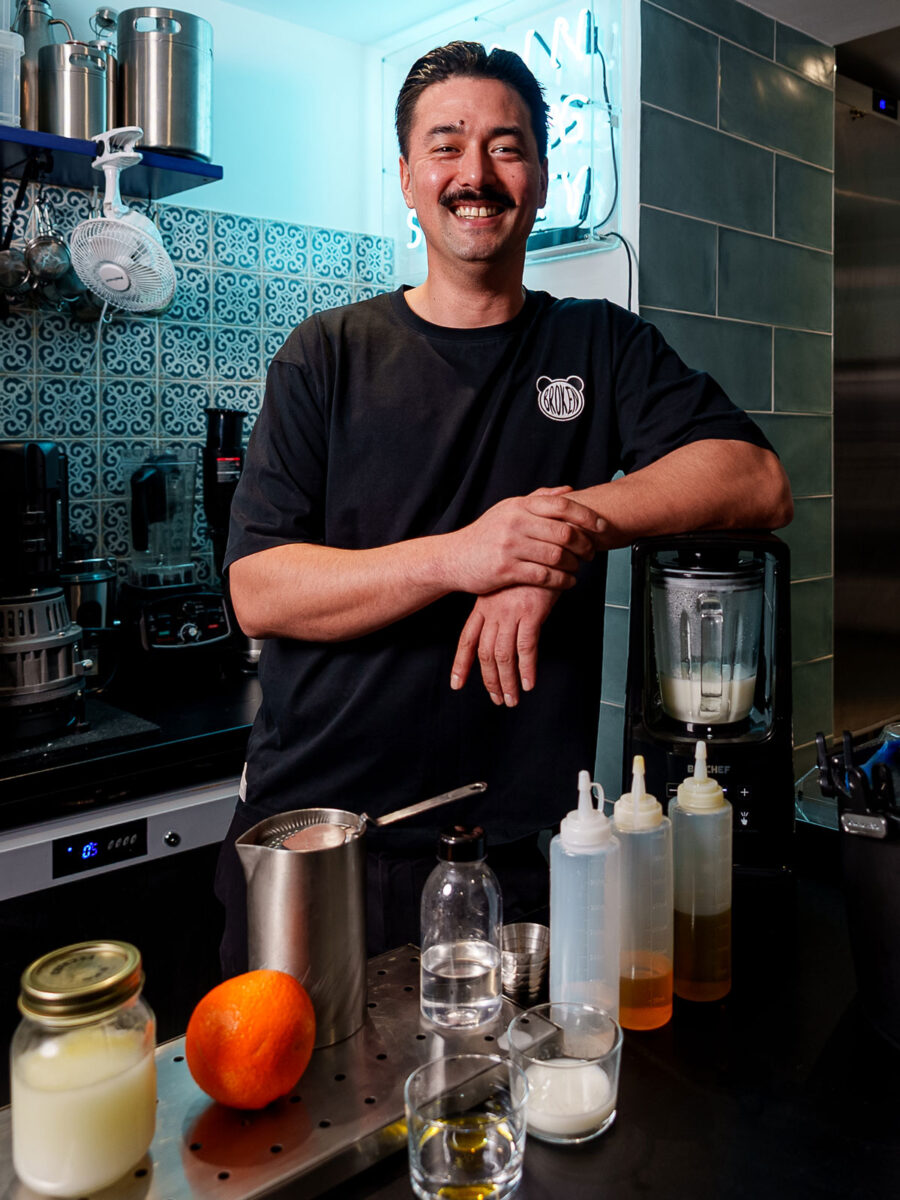
Fans of the ‘Back to the Future’ film series may recognise something of Dr Emmet Brown in Panda & Sons founder Iain McPherson, as he once again emerges wild-eyed from the Panda-lab, wielding another world-shaking cocktail-making breakthrough.
Revealed today, McPherson’s latest technique, ‘Densing’, is described as opening a new chapter in his exploration of flavour delivery – and as was the case with his development of sub-zero techniques such as Switching and Sous Pression, he is keeping none of it secret, instead sharing the process as open-source knowledge for others to take forward.
“We’ve spent over a decade exploring freezing for flavour,” says McPherson. “With Densing, I wanted to look at texture in a deeper way. It’s opened up a completely new direction for us and it feels like we’re only just scratching the surface.”
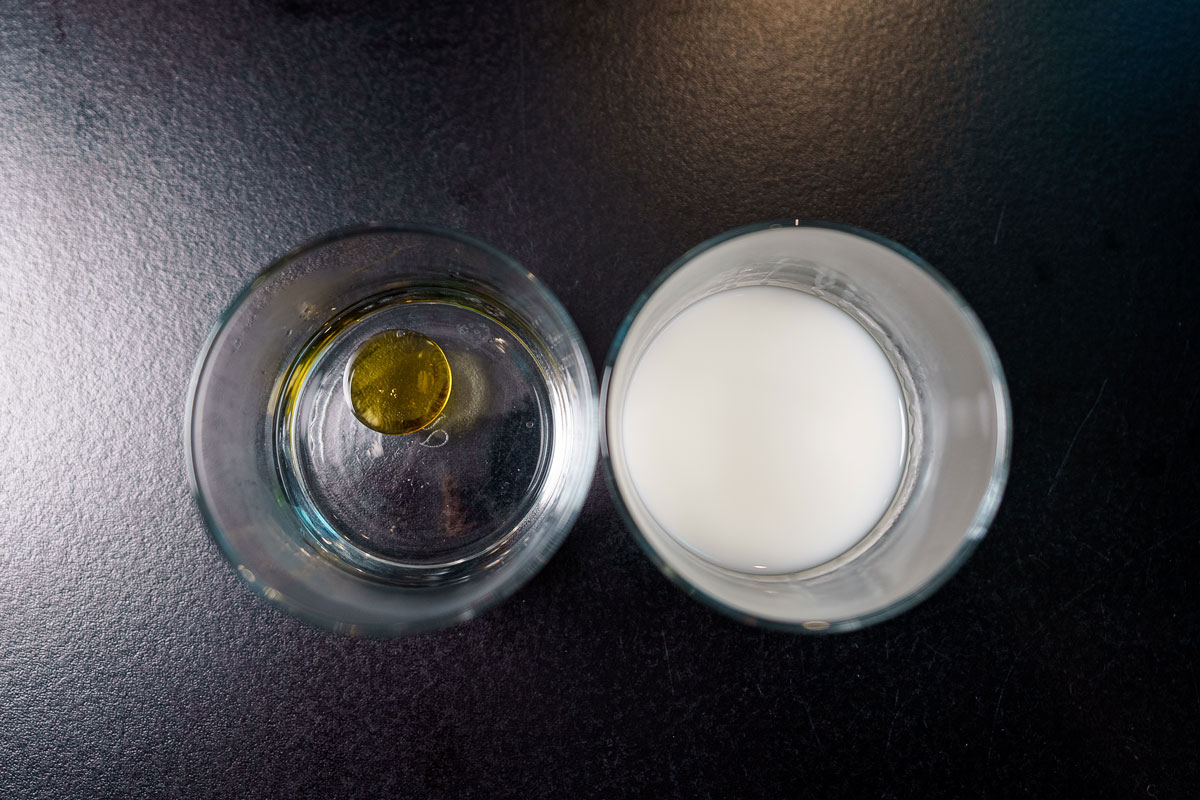
McPherson’s latest work focuses on texture, oil integration and flavour consistency, using a process inspired by ice cream homogenisation. At its simplest, Densing allows liquids to absorb oils in a stable, uniform way using vacuum blending.
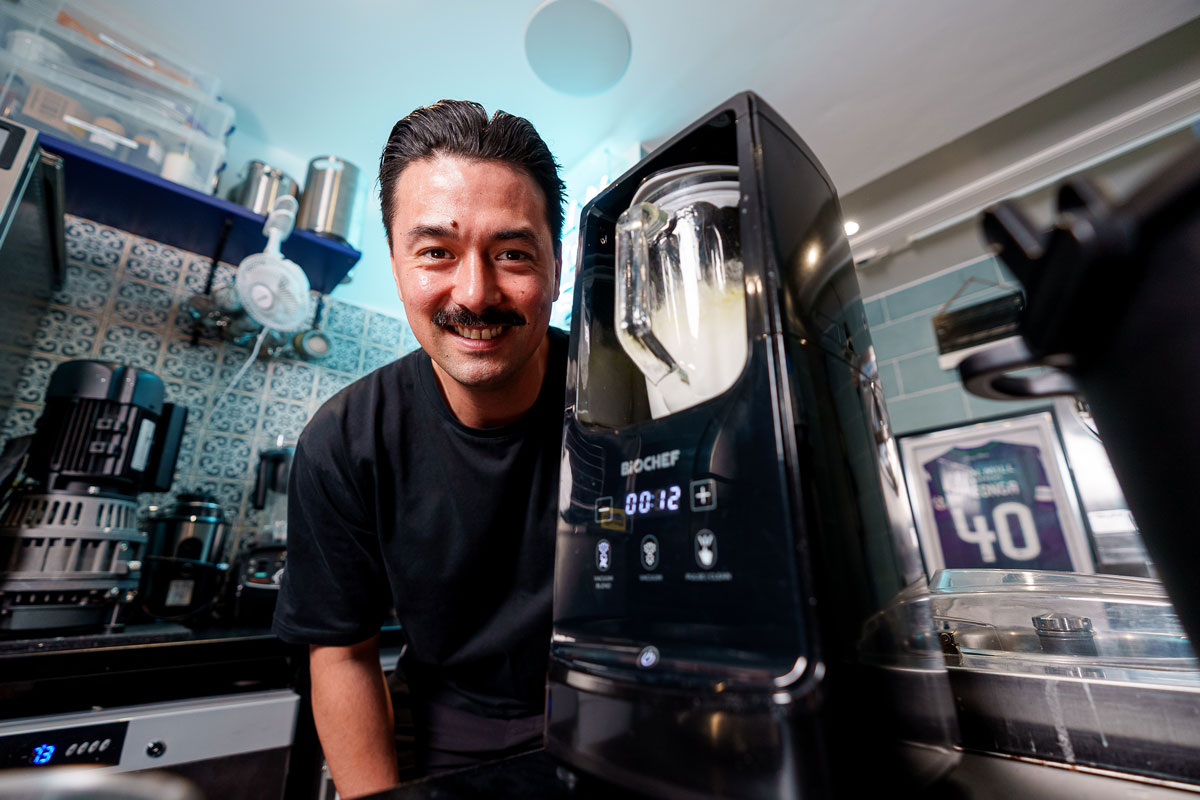
By reducing and evenly distributing oil particles throughout a liquid, the technique is said to ‘unlock new possibilities across flavour, aroma, mouthfeel and appearance’ of drinks, while also improving efficiency behind the bar.
McPherson admits that this development follows a period when many bars – Panda & Sons included – have leant heavily into clarified and ultra-clear drinks.
“There’s been a real focus on clear cocktails, but that often comes with a very similar texture and sometimes a loss of flavour,” he explained. “I started asking – is cloudy really a bad thing, if it actually gives you more?”
Densing, he said, reintroduces texture as a ‘key component’ of the drinking experience, allowing bartenders to create liquids that are ‘richer, more integrated and consistent from the first sip to the last’, without the separation typically associated with oil-based ingredients.
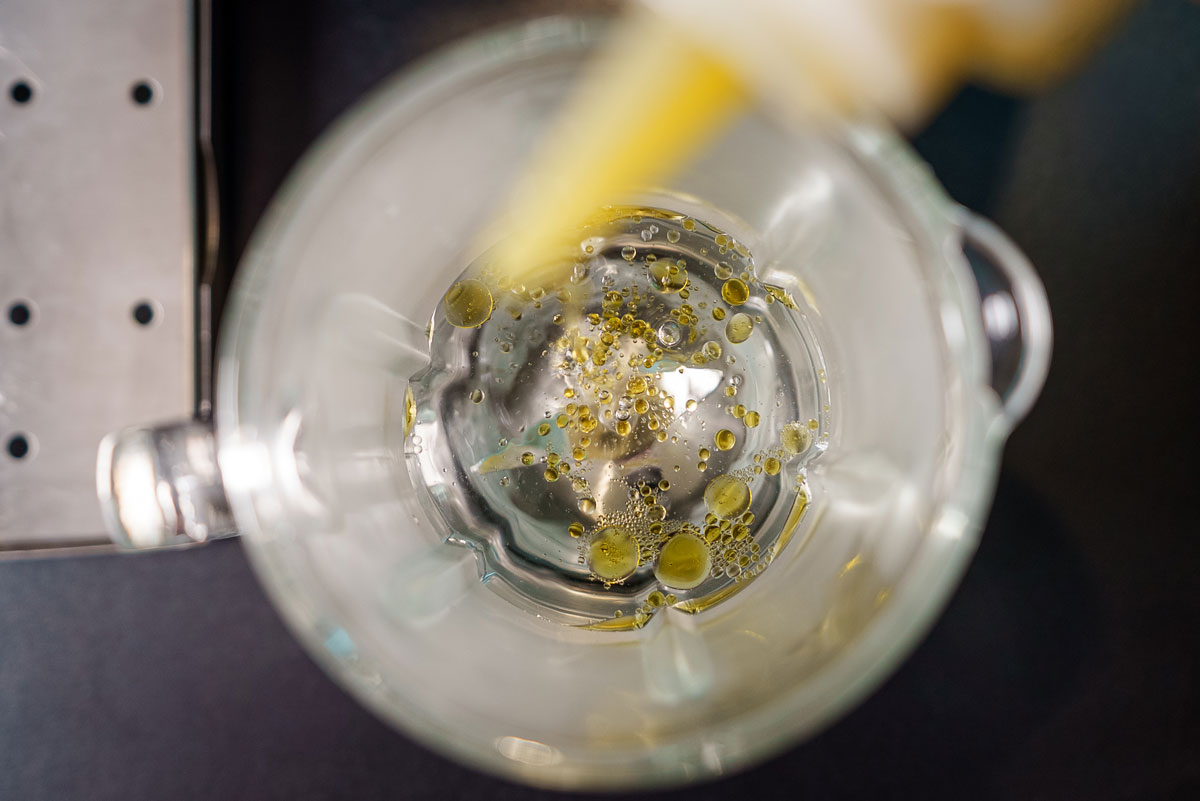
By enabling stable oil absorption, his belief is that Densing offers a more efficient and impactful alternative to traditional fat-washing techniques.
Combinations that would normally separate – such as oil and vinegar – can now exist in a unified, stable form, producing a more cohesive flavour profile, enhanced aroma delivery and a broader spectrum of texture, from light and silky to rich and creamy, to purely just aroma.
The new process is also claimed to reduce preparation time, increase yield from ingredients and allow for greater control over flavour intensity using less product.
Vacuum blending equipment is readily accessible. While rooted in industrial processes used in dairy and ice cream production, McPherson’s work has translated this into a practical, scalable method for bars, and he is now keen to see other bartenders take the process and run with it.
“We’ve never believed in keeping things behind closed doors,” he said. “If something’s useful, we want people to take it, adapt it and push it further and in different directions.”
Panda & Sons plans to release a series of educational videos and resources throughout the year, aimed at helping bartenders understand and implement the technique within their own programmes, alongside continuing to share it in person as the team travels globally for guest shifts, seminars and bar takeovers. “The first car wasn’t a Ferrari, so throughout the year we will be unlocking more and more of Densing’s potential,” said McPherson.
The results will now begin to appear within Panda & Sons’ ever-evolving drinks programme, including a forthcoming ‘word of mouth’ menu that will showcase different applications of Densing in practice.
“What excites me most is the potential,” added Iain. “It feels like the ceiling has lifted – or maybe that there isn’t one at all.”