 Kingfisher Drinks is has once again put the cat amongst the pigeons with the publication of its annual Boring Beer Index.
SLTN asked head of marketing John Price about what bar and pub operators – not to mention rival drinks brands – will discover in this latest edition.
What was the idea behind the Boring Beer Index? When did you first launch it?
Price: “We first launched the Boring Beer Index last year and the thinking behind it was that we were often hearing anecdotally from consumers saying they were starting to resent seeing the same lager brands behind the bar every time they visited a pub, bar or restaurant and were excited by the idea of trying something different. We thought we’d put this to the test by creating a yearly survey to ask them what they are bored of and what motivates their decision making when out in the on-trade, with the idea that it would become a kind of annual barometer to help publicans with their range choices.
“We know trading conditions are probably tougher than they’ve ever been for on-trade outlets, so it has never been more important for publicans to get their beer range right.
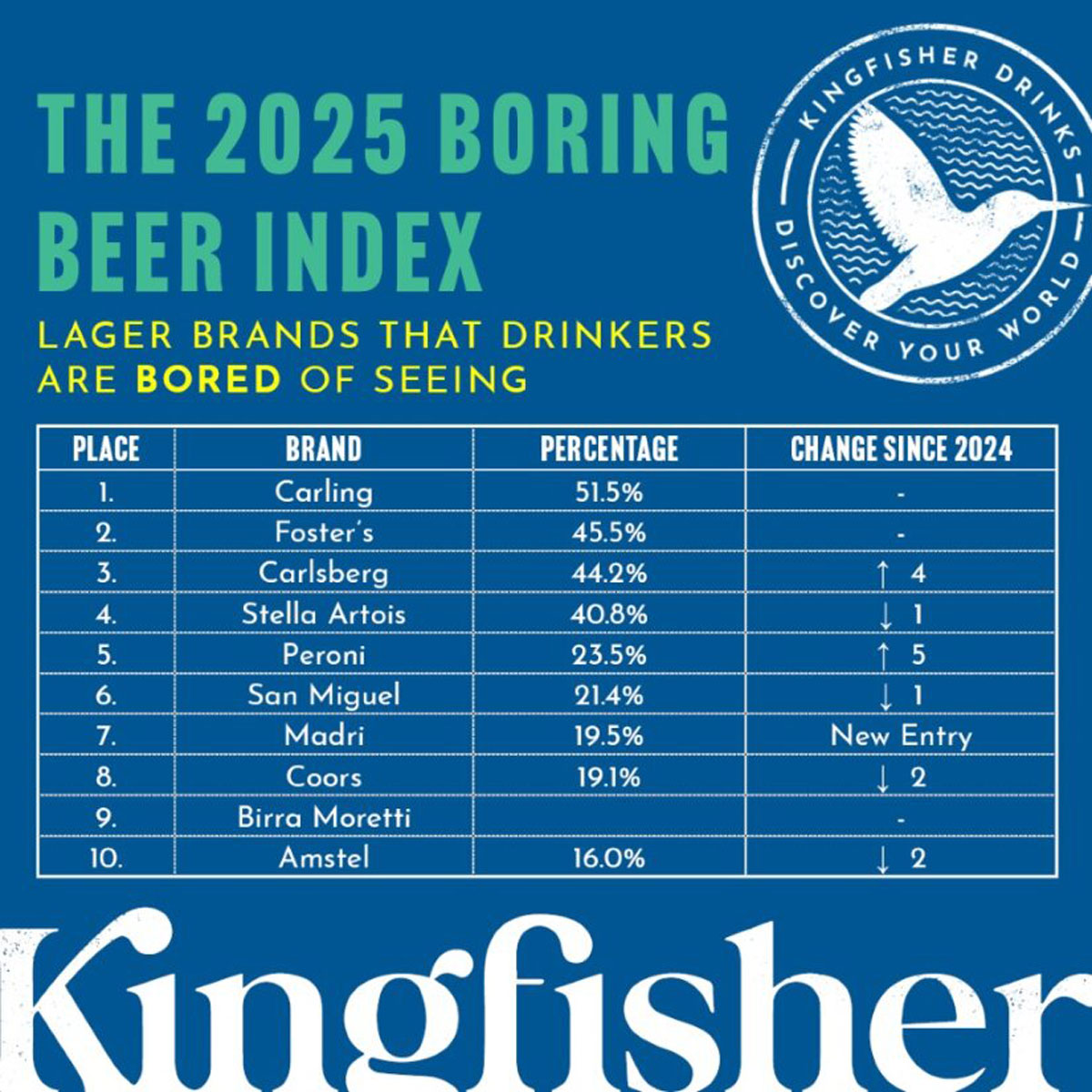
“I would like to clarify that we’re not telling individual operators what to stock – they will know their clientele better than anyone. Just because a brand features highly on the Boring Beer Index doesn’t mean it’s not the right beer for your outlet.
“In fact, most pubs and bars should probably have at least one or two of these beers in the range. We are simply observing that some drinkers would like the choice of some more interesting brands and having only beers in the top ten in your range is probably not a good idea.”
How is the Index compiled? Who do you speak to and what do you ask them?
“This year we’ve questioned one thousand drinkers from across the UK about their attitudes to beer brands and the ranges in their local pubs and bars. Those questioned ranged in age from 18-year-olds, taking their first steps in the on-trade to octogenarians still enjoying a pint or two in their local. The respondents also included both men and women.”
Do the questions change every year, or do you ask the same questions for the sake of consistency?
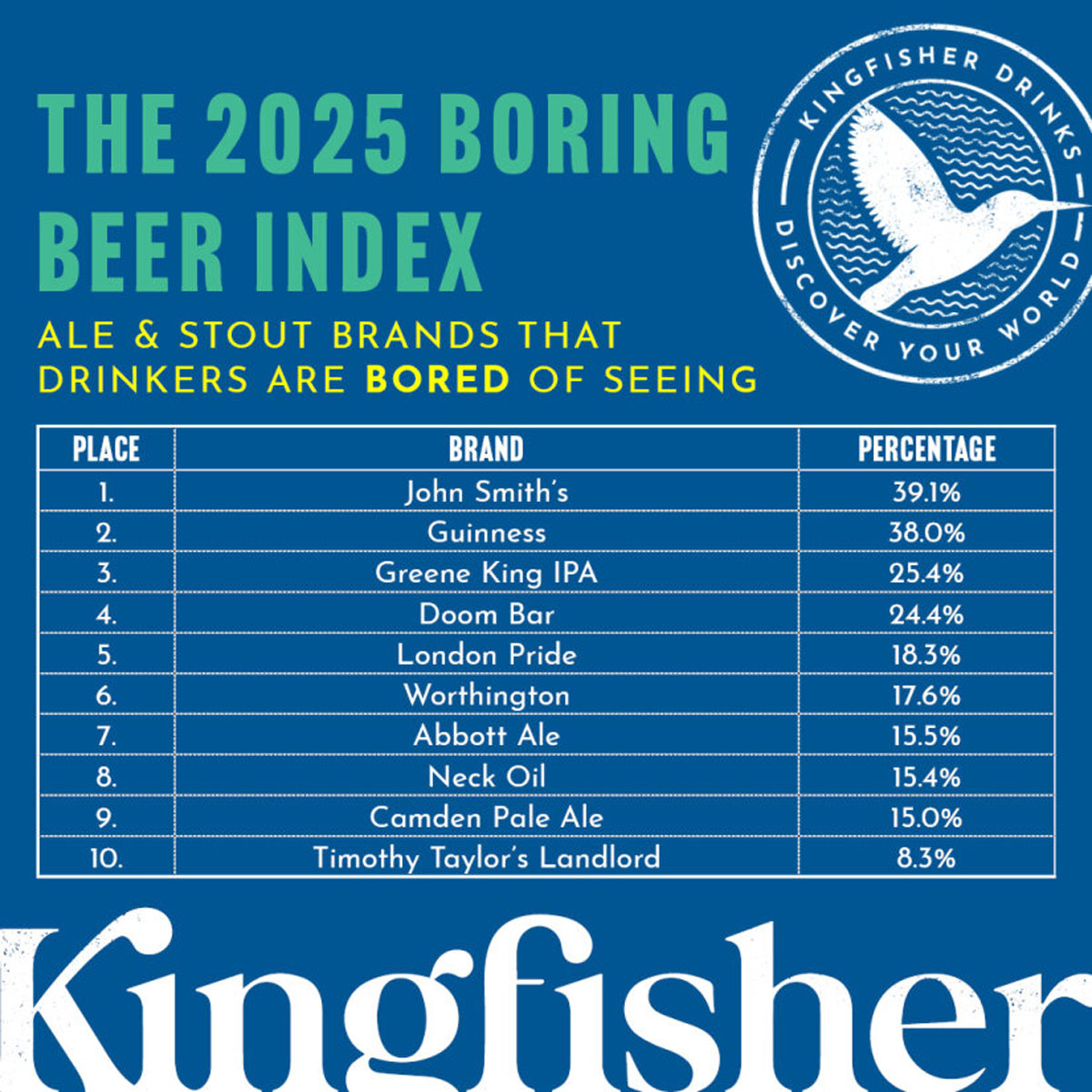
“Some questions remain the same so we can track year-on-year changes, but we’re evolving the research too. For instance, we were asked by many to include ales and stouts this year as they are also important parts of a beer range.”
What are the big findings this year? And has there been any major changes from last year’s report?
“There are lots of big findings so it’s worth reading the full report but let me take you through some of the ones I found most interesting.
“First, and probably most important, consumers are indeed a little dissatisfied, with 71% of respondents either ‘sometimes’ or ‘always’ bored of beer ranges they came across. Certainly not an emotion you want customers feeling when they walk into your outlet.
“53% of consumers said the beer range was ‘Extremely’ or ‘Very’ important when choosing which pub or bar to visit. And 20% of respondents even said they would leave a venue and go elsewhere if the pub didn’t have a good beer range!
“So, if range is important, what makes an enticing range? The top factor given by 59% of respondents was that a perfect beer range would have a variety of different beer styles. The bare minimum for most outlets would be lager, pale ale and stout.
“However, some outlets will require a much wider range of styles. This was closely followed by a range of prices. It’s really important to have something for everyone whether it is a price-friendly 3.4% lager for those on a budget or a super-premium pilsner for those customers looking for a treat.

“Finally, consumers feel there should be a mixture of some well-known established brands alongside some newer options. It is worth remembering that many people do still want their old favourites, at least some of the time. Just don’t have too many ‘boring beers’ on offer.”
Is there any indication of how long it takes for a brand to become ‘boring’? How often should pubs and bars think about introducing new brands?
“This is a complicated question. There seem to be lots of factors at play for consumers deciding whether a beer is boring. Clearly time is one factor but so is overall size of brand and the density of distribution in the area. However, this doesn’t tell the full story either.
“(A major Italian beer brand) is the second biggest lager brand in the on-trade in volume and yet came lower in our list than various smaller brands. We believe that marketing comms, glassware, beer taps, POS and brand line extensions all play a part too. This is something we would like to explore further in future years.”
What lessons do you think pub and bar owners should take from this year’s Boring Beer Index?
“Simply that many consumers are tiring of some of the better-known beer brands, so it’s important that pub and bar operators keep their ranges fresh because the consumer is ready for this!
“The report demonstrates that publicans should include at least one or two less well-known brands in their range, and ensure their staff are well trained to talk about them, the new brand is prominently presented, and they may also want to consider an introductory price to drive trial. By combining their knowledge of their local clientele and leaning on their suppliers, they can create the perfect range of old favourites and interesting new brands to get their tills ringing!”